
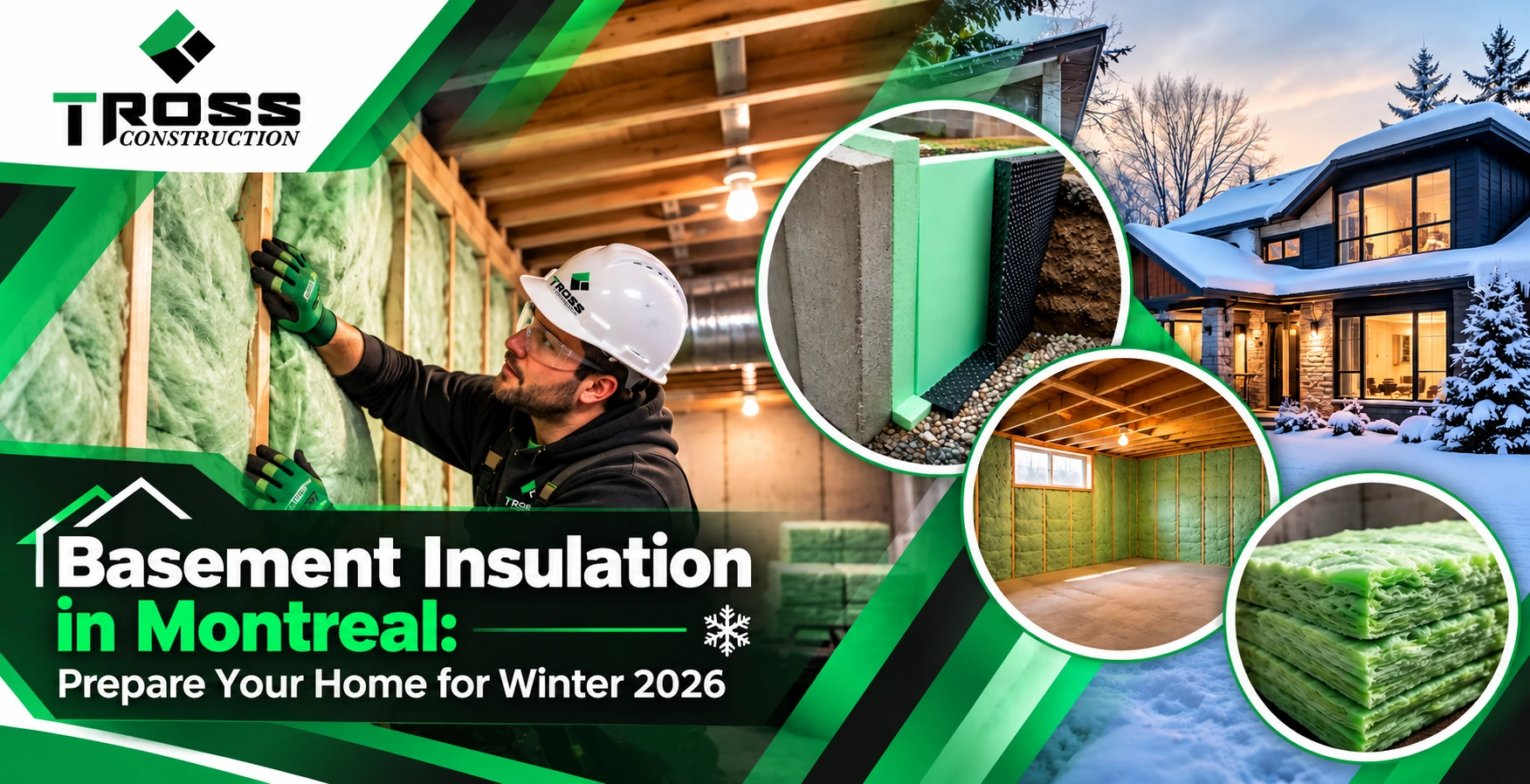
Montreal winters are long, and temperatures often fall well below -20°C. If your basement is cold, damp, or draughty, it is quietly costing you money every day. An uninsulated basement lets heat escape and invites moisture, mold, and uncomfortable floors. It can even put your pipes at risk.
At Tross Construction, we help Montreal homeowners fix these problems before the first deep freeze. In this guide, you’ll learn why basement insulation matters, which materials work best in Quebec’s climate, and how to prepare your home for winter 2026.
Why Basement Insulation Matters in Montreal
Many homeowners insulate their attic and windows but forget the basement. Foundation walls are in contact with cold ground and, in winter, with frozen soil. Without insulation, they act like a huge cold surface that pulls heat out of your home.
Proper basement insulation helps you:
- Lower heating bills. Less heat escapes, so your furnace or heat pump works less.
- Warm up cold floors. Rooms above the basement feel noticeably more comfortable.
- Control moisture and condensation. Warm indoor air meeting cold concrete creates condensation, which leads to mold.
- Protect plumbing. Pipes along exterior walls are less likely to freeze.
- Add usable living space. An insulated basement is ready for a family room, office, gym, or rental unit.
- Increase resale value. Buyers in Montreal pay attention to energy efficiency and finished space.
Common Basement Problems in Montreal Homes
Montreal has a mix of housing: older plexes in the Plateau, Rosemont, Verdun, and Villeray; post-war bungalows in the suburbs; and newer builds. Each comes with its own basement challenges:
- Old stone or rubble foundations that leak air and moisture
- Poured concrete walls that stay cold all winter
- Spring thaw dampness and occasional water infiltration
- Musty smells caused by humidity
- Uninsulated rim joists (the area where the foundation meets the floor framing), a major source of drafts
An insulation project works best when these issues are diagnosed first. Insulating over a damp wall only traps the problem.
Best Basement Insulation Options for Montreal’s Climate
There is no single best material for every home. The right choice depends on your foundation type, moisture conditions, and budget.
1. Closed-Cell Spray Foam
Spray foam seals air leaks and adds insulation in one step. It is moisture-resistant and works very well on irregular surfaces such as old stone walls and rim joists. It costs more upfront, but it often delivers the strongest performance in a cold climate.
2. Rigid Foam Boards (XPS, EPS, or Polyiso)
Rigid boards are a popular choice for poured concrete walls. They resist moisture and can be paired with framing and drywall for a finished look. Joints must be sealed carefully to avoid air gaps.
3. Mineral Wool Batts
Mineral wool is fire-resistant, handles moisture well, and is often installed in a framed wall with rigid foam behind it. It is a good option for homeowners who want a breathable, fire-safe system.
4. Insulated Wall Systems
Some projects combine layers, such as a rigid foam layer against the foundation and a framed wall and batt insulation, to hit higher performance targets and reduce thermal bridging.
Important: Avoid putting fiberglass batts directly against a concrete foundation wall. Moisture can get trapped and cause mold. Choose a system designed for below-grade conditions.
Step-by-Step: How to Prepare Your Basement for Winter 2026
Step 1: Inspect for Moisture and Cracks
Look for efflorescence (white powder on walls), stains, peeling paint, musty odors, and cracks. Water issues should be solved first, whether through crack repair, drainage improvements, or waterproofing.
Step 2: Seal Air Leaks
Air sealing around the rim joists, windows, utility penetrations, and wall-floor junctions often gives the quickest comfort improvement.
Step 3: Choose the Right Insulation System
Match the material to the foundation, moisture levels, and your plans for the space. A professional assessment helps avoid costly mistakes.
Step 4: Install a Proper Moisture Strategy
In Quebec’s climate, vapor control must be planned carefully. The wrong barrier in the wrong place can cause hidden condensation. This is where experience matters.
Step 5: Finish and Protect
Once insulation is in, cover it with code-compliant finishes. Some insulation materials, such as foam, must be protected by an approved thermal barrier like drywall.
Step 6: Don’t Wait Until December
Contractors in Montreal book up quickly in fall, and cold weather makes some work harder. Start early to be ready for winter.
How Much Does Basement Insulation Cost in Montreal?
The cost depends on:
- Basement size and wall height
- Type of insulation and finishing level
- Condition of the foundation (repairs, waterproofing)
- Whether you are adding framing, drywall, or a full renovation
- Accessibility and local permit requirements
Rather than guessing, request a written estimate based on your actual space. Tross Construction offers clear, itemized quotes so you know exactly what you are paying for.
Incentives and Programs
Quebec and federal programs for energy-efficient renovations change regularly. Check current offers from Rénoclimat and Hydro-Québec to see if your project qualifies. Our team can help you understand which upgrades are commonly eligible.
Why Hire a Professional Instead of DIY?
Insulation looks simple, but basements are one of the trickiest parts of a house. Mistakes can lead to trapped moisture, mold, poor air quality, fire code issues, and wasted money. A professional contractor will:
- Diagnose moisture problems before covering them up
- Choose materials suited to Montreal’s climate
- Follow Quebec building code requirements
- Deliver a clean, durable finish
Always check that your contractor holds a valid RBQ (Régie du bâtiment du Québec) license.
Why Choose Tross Construction for Basement Insulation in Montreal?
Tross Construction is a trusted partner for homeowners who want their basement done right.
- Local knowledge of Montreal’s climate and housing types
- Solutions for plexes, houses, and condos with basement access
- Honest assessments and transparent pricing
- Quality workmanship and clean job sites
- Support from planning to finishing
Whether you want to cut heating costs, stop cold drafts, or turn your basement into a livable space, our team is ready to help.
Get Your Free Basement Insulation Quote
Winter 2026 will arrive sooner than you think. Don’t wait for cold floors and high bills to force your hand.
Contact Tross Construction today to book your free assessment and get a custom quote for basement insulation in Montreal.
📞 [4389208647]
📧 [contact@trossconstruction.ca]
Frequently Asked Questions (FAQs)
1. When is the best time to insulate a basement in Montreal?
The best time is early fall, before temperatures drop. Contractors have more availability, materials cure better, and you’ll be comfortable all winter. That said, interior basement insulation can be done year-round, so it’s never too late to start.
2. What is the best insulation for a basement in Montreal?
Closed-cell spray foam and rigid foam boards are among the most effective options for Montreal’s cold, damp conditions because they resist moisture and limit air leakage. The best choice depends on your foundation type and moisture levels, so a professional inspection is recommended.
3. Do I need to waterproof my basement before insulating it?
If you have active leaks or persistent dampness, yes. Insulation should never be used to cover a moisture problem. Fixing cracks, drainage, or water infiltration first protects your investment and prevents mold.
4. How much can basement insulation save on heating costs?
Savings vary by home, but insulating and air-sealing the basement can noticeably reduce heat loss and improve comfort. The exact result depends on your current insulation, foundation, and heating system.
5. Does Tross Construction provide free estimates for basement insulation in Montreal?
Yes. Tross Construction offers free, no-obligation estimates. We inspect your basement, explain your options, and provide a clear written quote.